
How to Budget in 15 Minutes Per Week
For a long time I avoided budgeting because I didn’t realize you could budget in 15 minutes per week.
It felt like too much work. I was also a little afraid of what it might tell me.
Between work, family, kids’ soccer, school, and trying to stay healthy, life fills up fast. Spending hours building spreadsheets and tracking every little expense felt unrealistic, and not very appealing.
At the same time, I knew it was something important. I wasn’t going to achieve my financial goals if I didn’t manage my money better.
Then I remembered how I bought my first car.
I budgeted for it during a deployment in the Marines, using a small pocket notebook. I had a simple plan, a clear goal, and I followed it. That system worked.
So instead of avoiding budgeting altogether, I decided to come back to that same idea, just simpler, more realistic, and better suited for real life today.
But here’s the truth:
You don’t need to budget every day. And you don’t need an overly complicated system.
What you do need is a simple weekly process that gives you clarity without the stress.
In this post, I’ll show you how to budget in 15 minutes per week using a practical method called zero-based budgeting.
What Budgeting Should Actually Do for You
A good budget isn’t about restricting your life. It’s about giving you control.
A Good Budget Does 3 Things
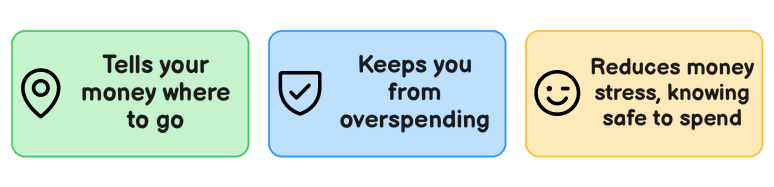
- Tells your money where to go: Instead of wondering where your paycheck disappeared at the end of the month, you decide ahead of time what matters most.
- Keeps you from overspending: Clear category limits act like guardrails so impulse purchases don’t quietly derail your bigger goals.
- Reduces money stress by showing what is safe to spend: When your bills and savings are already covered, you can enjoy family dinners, hobbies, and weekends without guilt.
People don’t fail at budgeting because they’re bad with money.
They fail because they’re trying to use overcomplicated budgeting systems.
So we’re going to simplify it.
What Is Zero-Based Budgeting?
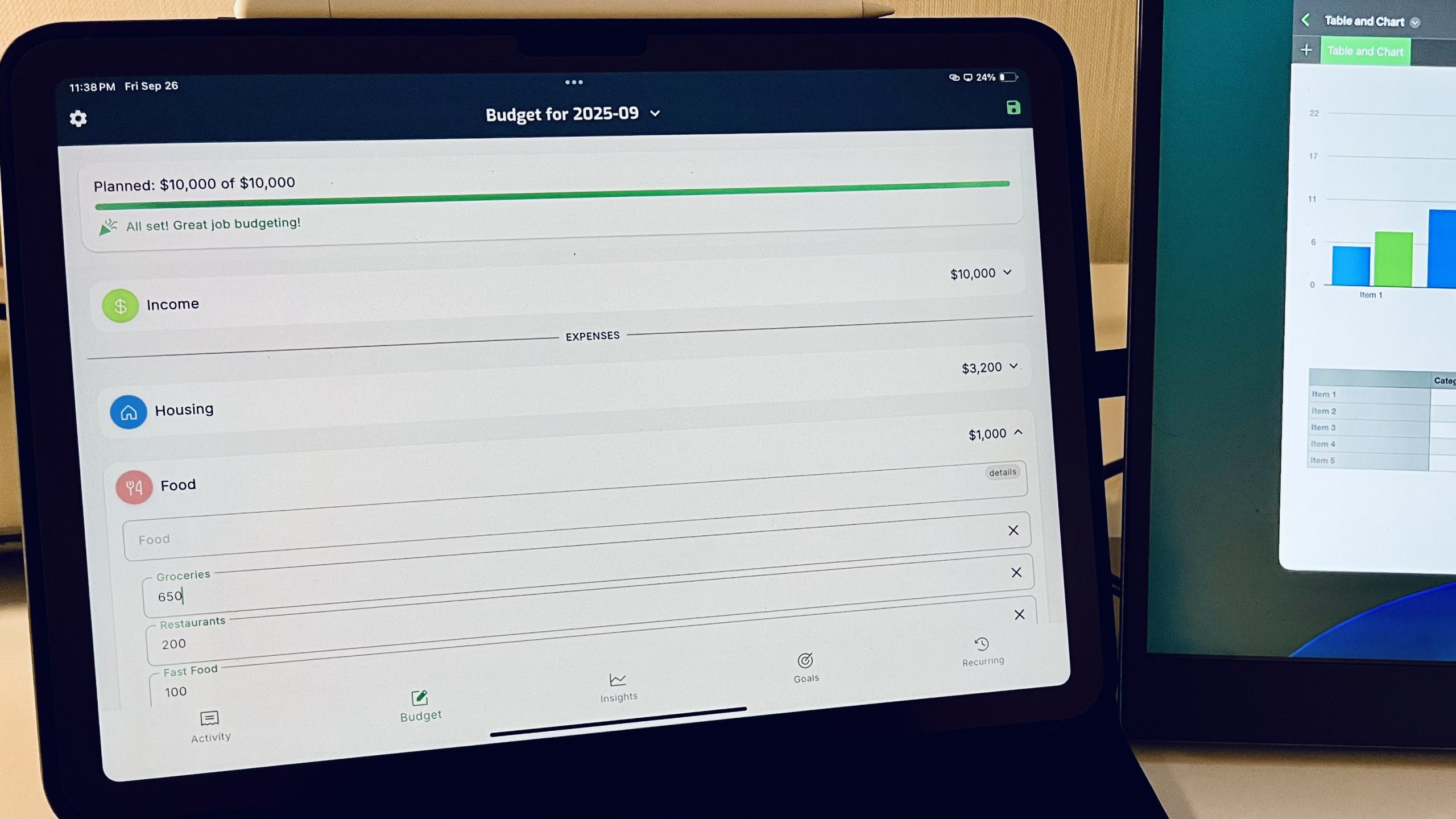
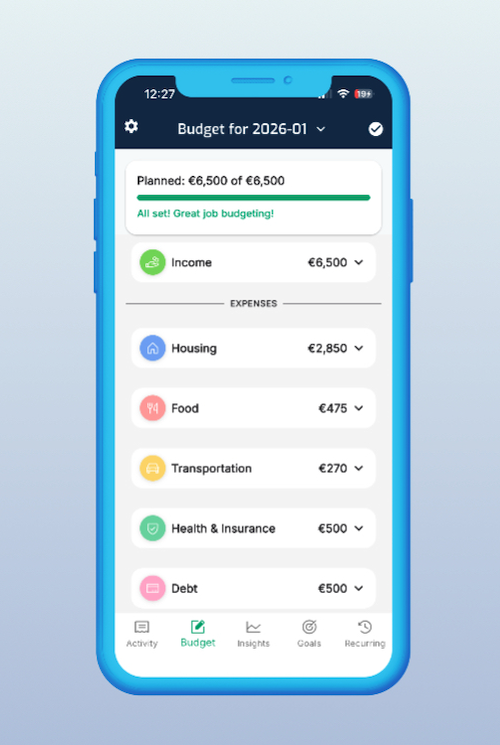
Simply put, zero-based budgeting is a system where every dollar is assigned a job before the month begins.
That doesn’t mean you spend everything. It means you spend with intention.
Your money gets organized into clear buckets like:
- Bills and housing
- Groceries and essentials
- Savings and future goals
- Debt payoff
- And yes, even fun money
How to Budget in 15 Minutes Per Week: The 3-Step Routine
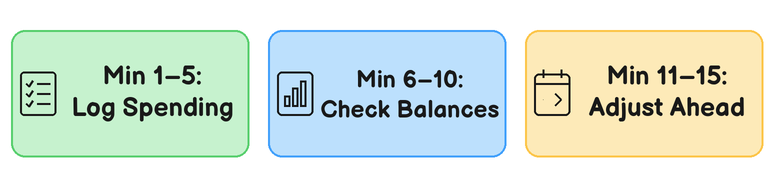
Setting up a monthly plan takes a little thought the first time, but maintaining it shouldn’t eat up your weekend. Once your monthly categories are in place, you can budget in 15 minutes per week by breaking your check-in into three five-minute blocks.
Pick one consistent time each week, such as Sunday evening with a cup of coffee or Monday morning before work starts, and run through these three steps.
Minutes 1 to 5: Log and Categorize Your Recent Transactions
Start by capturing what you spent over the last seven days. If you let receipts and card charges pile up for an entire month, going through them feels like doing taxes. Reviewing a single week takes five minutes because you still remember what every purchase was for.
Whether you prefer entering transactions manually for extra awareness or syncing your accounts automatically, the goal is the same: make sure every expense from the past week is assigned to its proper category. In our 5S budgeting approach, keeping the clutter out of your transaction list is what keeps the whole system easy to run.
Minutes 6 to 10: Check Your Category Balances Against Reality
Once your numbers are up to date, scan your variable spending categories. Fixed bills like your mortgage or rent take care of themselves once they are scheduled, so focus your attention on the categories that move around during the month:
- Groceries and dining out: Are you pacing smoothly for the rest of the month, or did a busy week of kids’ activities push you toward your limit early?
- Transportation and fuel: Did an extra trip or maintenance cost eat into this bucket?
- Fun money and personal spending: How much room do you actually have left for the next few weeks?
You aren’t grading yourself here. You are just reading the gauges on the dashboard so there are no surprises at the end of the month.
Minutes 11 to 15: Look at the Week Ahead and Adjust
Real life rarely follows a script. One week has a school field trip, a birthday gift, or a higher grocery bill, and the next week is quiet. A budget only breaks when you treat it like a rigid set of rules instead of a living plan.
Use your final five minutes to look at the calendar for the upcoming week. If groceries ran $40 over because you stocked up, move $40 from your dining-out or fun-money bucket right now so your overall total still balances to zero. Your savings goals and fixed bills stay protected, and you start the new week knowing the exact numbers you have to work with.
Why Weekly Check-Ins Work Better Than Monthly Catch-Up
When you only check your money at the end of the month, you are looking in the rearview mirror. The money is already gone, and all you can do is feel frustrated about what happened three weeks ago.
A 15-minute weekly check-in puts you back in the driver’s seat. Research in the Federal Reserve’s Report on the Economic Well-Being of U.S. Households consistently shows how closely day-to-day cash-flow awareness ties to household financial resilience and peace of mind. Similarly, foundational money management curricula like the FDIC Money Smart for Adults emphasize tracking spending against a written plan so small leaks don’t turn into high-interest debt.
In my corporate work, we use a simple continuous improvement loop: make a plan, run the process, check the results, and adjust. Checking your budget once a week is that exact loop applied to your family’s money. Short, regular check-ins catch small course corrections early, long before they become stressful.
Choosing a Simple Tool You Will Actually Use
You can run this 15-minute weekly process in a pocket notebook, a clean spreadsheet, or an app. The best tool is whichever one removes enough friction that you actually show up every week.
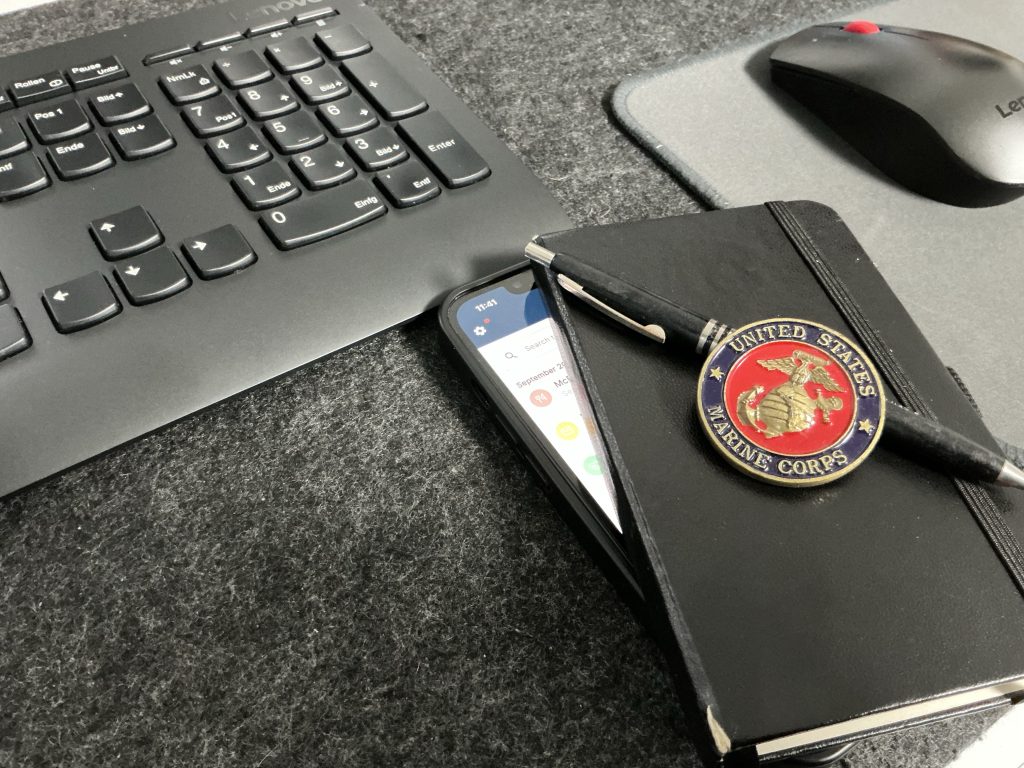
That need for speed and simplicity is why I built FitBudget. As a dad of two with a full-time career, I wanted the clarity of my old Marine Corps notebook on my phone without bloated menus or giving away my privacy. You can use the free version with manual transaction entry anywhere in the world, or use FitBudget Pro if you want automatic bank connections for US and Canadian banks.
Whichever tool you choose, keep your categories simple and give yourself grace during the first few weeks. Set a 15-minute timer this Sunday, assign every dollar a job, and enjoy the rest of your week knowing your money is handled.





One Comment